
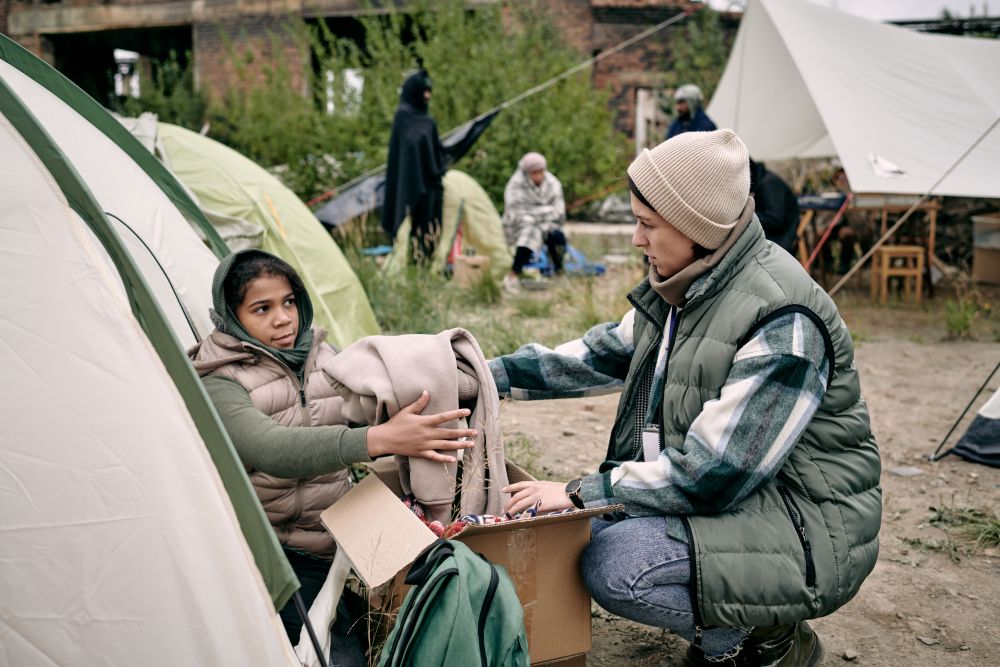
When we talk about women’s health in crisis settings, the conversation usually jumps straight to food, shelter and safety. All of those matter deeply. But there’s another layer of need that’s easier to overlook and harder to talk about: the daily reality of staying clean, dry and dignified when you simply don’t have access to basic hygiene.
That’s where Wild Wipe sits – not as a grand solution to global problems, but as one small, practical tool that can make a very human difference.
A world on the move – and women carrying the burden
According to UNHCR’s latest Global Trends report, around 123 million people worldwide were forcibly displaced at the end of 2024 – the highest number ever recorded and nearly double a decade ago.
In many of these crises, women and children make up the majority of those forced to flee. In Sudan, for example, recent conflict has displaced almost 12 million people, with women and children heavily represented among those on the move and in camps.
For displaced women and girls, every part of daily life becomes harder:
- Access to toilets is limited, unsafe or shared with large numbers of strangers
- Running water and soap are unreliable
- Privacy is scarce
- Menstrual products and basic hygiene items are often missing from aid distributions
In that context, something as simple as thoroughly wiping after urinating can become a challenge. Over time, that can contribute to irritation, skin breakdown, discomfort and an increased risk of urinary tract infections – especially when women are also managing menstruation, pregnancy, chronic illness or incontinence.
Hygiene poverty at home: the UK is not exempt
This isn’t only a “global South” issue. Hygiene poverty is a growing crisis in the UK too.
Recent research from In Kind Direct estimates that around 9.2 million adults in the UK are living in hygiene poverty – struggling to afford basic items like soap, toothpaste, period products and other essentials to keep clean.
The Hygiene Bank’s 2024 report similarly suggests that around 4.2 million adults (8% of the population) are affected, with a significant increase in just two years.
At the same time, homelessness is rising. In England alone, an estimated 380,000+ people lack permanent housing, with thousands sleeping rough and hundreds of thousands more in temporary or insecure accommodation.
Women are disproportionately affected in hidden ways. Shelter’s analysis found that around 60% of homeless adults living in temporary accommodation in England are women, despite women making up just over half the adult population.
Add to that the reality of period poverty: recent polling suggests that around one in five women and girls in the UK are struggling to afford menstrual products, with levels of period poverty rising sharply in recent years.
When you can’t always afford pads, tampons, soap or even toilet paper, the basics of feeling clean and comfortable quickly fall out of reach.
Why wiping matters more than we talk about
Most hygiene conversations focus on showers, soap and menstrual products. The quieter reality is that urination happens many times a day, often in conditions that are:
- Crowded
- Unsanitary
- Lacking privacy
- Lacking toilet paper
- Lacking safe disposal options
For a woman living in a refugee camp, sleeping in a car, or staying in a hostel or temporary accommodation, that can mean:
- Drip-drying after every wee
- Reusing small scraps of paper or tissues
- Using fabric or clothing that can’t be washed properly
- Staying damp for long periods in the same underwear
Over days and weeks, that can contribute to chafing, soreness, infections and a deep sense of loss of dignity. It’s not dramatic enough to hit headlines, but it quietly erodes physical and emotional wellbeing.
Where Wild Wipe fits in
Wild Wipe is not a replacement for toilets, clean water or period products. Those are non-negotiable rights. But it can be a useful addition to the toolkit.
Because it is:
- Reusable and durable – designed to last for years rather than days
- Compact and discreet – small enough to fit into dignity kits, hygiene packs or a pocket
- Antimicrobial and easy to clean – made from materials that inhibit bacterial growth between washes and safe to wash with basic soap and water
- Designed for women’s anatomy – smooth, curved and comfortable to use
Wild Wipe can:
- Give women in camps or temporary accommodation a way to wipe properly even when there’s no toilet paper
- Reduce reliance on makeshift materials that are hard to keep clean
- Complement existing hygiene kits (soap, pads, underwear) by addressing the very frequent need to urinate and wipe
- Help reduce waste where toilet paper is often burned, buried or left in the environment
Used as part of broader hygiene support, it’s a small, practical step towards comfort and dignity – not a solution to everything, but a meaningful contribution.
Our commitment: partnership, not parachuting
For humanitarian use, Wild Wipe is offered at significantly reduced, near-cost pricing to NGOs, charities and community projects working with women and girls in low-resource settings. The aim is not to “sell a product to the vulnerable,” but to:
- Listen to frontline organisations about what’s actually useful
- Integrate Wild Wipe into existing hygiene and dignity kits where appropriate
- Provide clear, culturally sensitive instructions and education materials
- Evaluate feedback so we’re led by women’s experiences, not assumptions
Alongside this, a 5% of our profits is committed to supporting women’s health research and projects globally, recognising that hygiene, housing, sanitation, reproductive health and safety are all connected.
A quiet but important part of dignity
When we think about the 123 million people displaced around the world, or the millions experiencing homelessness and hygiene poverty in the UK, it’s easy to feel overwhelmed.
No single product can fix structural injustice, war, or a broken housing system.
But we can still choose to pay attention to the everyday realities that shape a woman’s sense of self: whether she feels clean, dry, comfortable and able to move through the world without shame.
Wild Wipe sits in that quiet, practical space.
It’s a tiny item that says: your comfort matters, your hygiene matters, and your dignity matters — wherever you are, and whatever you’re facing.

Leave a comment
This site is protected by hCaptcha and the hCaptcha Privacy Policy and Terms of Service apply.